Kermanshah sits in the fertile valley of the Qareh Sū River in western Iran, about 525 km from Tehran, and serves as the capital of Kermanshah Province, County, and Central District. Founded in 390 CE by the Sasanian prince Bahram IV—whose title “Kirmanshah” means “King of Kerman”—the city occupies a strategic point on the ancient caravan route linking the Mediterranean to Central Asia. Today it is home to nearly one million residents of diverse Kurdish tribes who mingle amid a landscape of prehistorical caves, Achaemenid and Sasanian rock reliefs at Bisotun and Taq-e Bostan, and bustling bazaars. Kermanshah’s economy thrives on its rich agricultural hinterland—producing wheat, barley, rice, fruits, and oilseeds—and on industries such as textile manufacturing, food processing, sugar and oil refining, and carpet weaving. The city’s four-season climate and cultural tapestry have earned it the nickname “the India of Iran,” reflecting its ethnic, linguistic, and ecological diversity. Modern Kermanshah blends historic sites with contemporary amenities, including universities, hospitals, and an international airport, making it both a regional hub and a gateway to Iran’s storied western frontier.
About the Climate of Kermanshah
Kermanshah, perched at approximately 1,400 meters on the Zagros Mountains’ slopes, experiences an arid continental climate characterized by cold, rainy winters and hot, sunny summers. During winter (December–February), frequent night frosts prevail, with daytime temperatures ranging from 8 to 15 °C, occasional mild interludes exceeding 15 °C, and record lows plunging to −27 °C (with a modern-era low of −20.3 °C)1. Spring (March–May) brings unstable weather, gusty winds, and most of the city’s annual 16.3 inches (414 mm) of precipitation, peaking at roughly 2.7 inches in March before tapering off by April. Summers (June–August) are intensely hot and bright, with highs routinely climbing to 35–40 °C and heatwaves pushing temperatures to 43–44 °C, but minimal rainfall during these months. Across the year, Kermanshah basks in approximately 2,910 hours of sunshine, making it one of Iran’s sunniest urban centers outside the coastal Caspian region.
Kermanshah World Heritage Sites
Kermanshah Province is home to Iran’s sole UNESCO World Heritage Site: Bistoon (Behistun) Historic Site.
Bistoon (Behistun) Historic Site
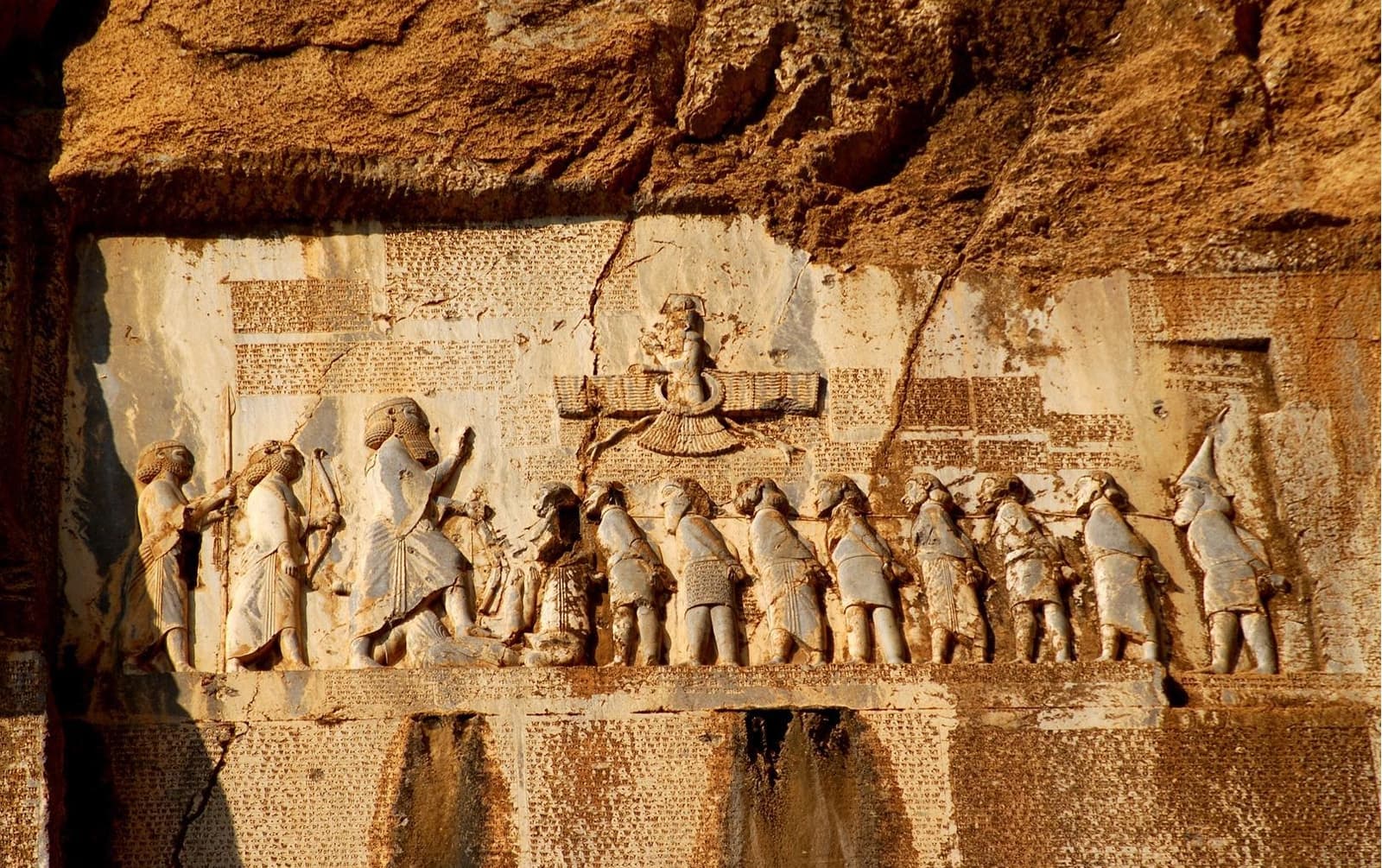
Perched on the limestone cliffs of Mount Bisotun about 30 km northeast of Kermanshah city, this monumental relief and trilingual cuneiform text was commissioned by Darius I in the late 6th century BCE to proclaim his rise to power and legitimize Achaemenid rule. Stretching over 15 meters in height, the inscription recounts battles, court intrigues, and dynastic lineage in Old Persian, Elamite, and Babylonian—an ancient Rosetta Stone that unlocked our understanding of cuneiform script. Alongside the text, carved figures depict Darius and his captives, while nearby bas-reliefs, such as the 1.5-meter-tall statue of Herakles, blend mythological iconography with imperial propaganda. Inscribed on the UNESCO list in 2006, Bisotun remains a testament to early Persian artistry, inscriptional technology, and the crossroads of civilizations along the Silk Road.
Attractions of Kermanshah
Perched at the crossroads of ancient Silk Road routes, Kermanshah greets visitors with a tapestry of archaeological grandeur, artistic splendor, and vibrant local life, showcased most brilliantly through four signature attractions.
Behistun Inscription
First, the Behistun Inscription—carved high into Mount Bisotun’s limestone escarpment—stands as Iran’s sole UNESCO World Heritage site, where Darius I’s 6th-century-BCE trilingual cuneiform text and monumental reliefs vividly chronicle imperial victory and dynastic legitimacy.
Taq-e Bostan
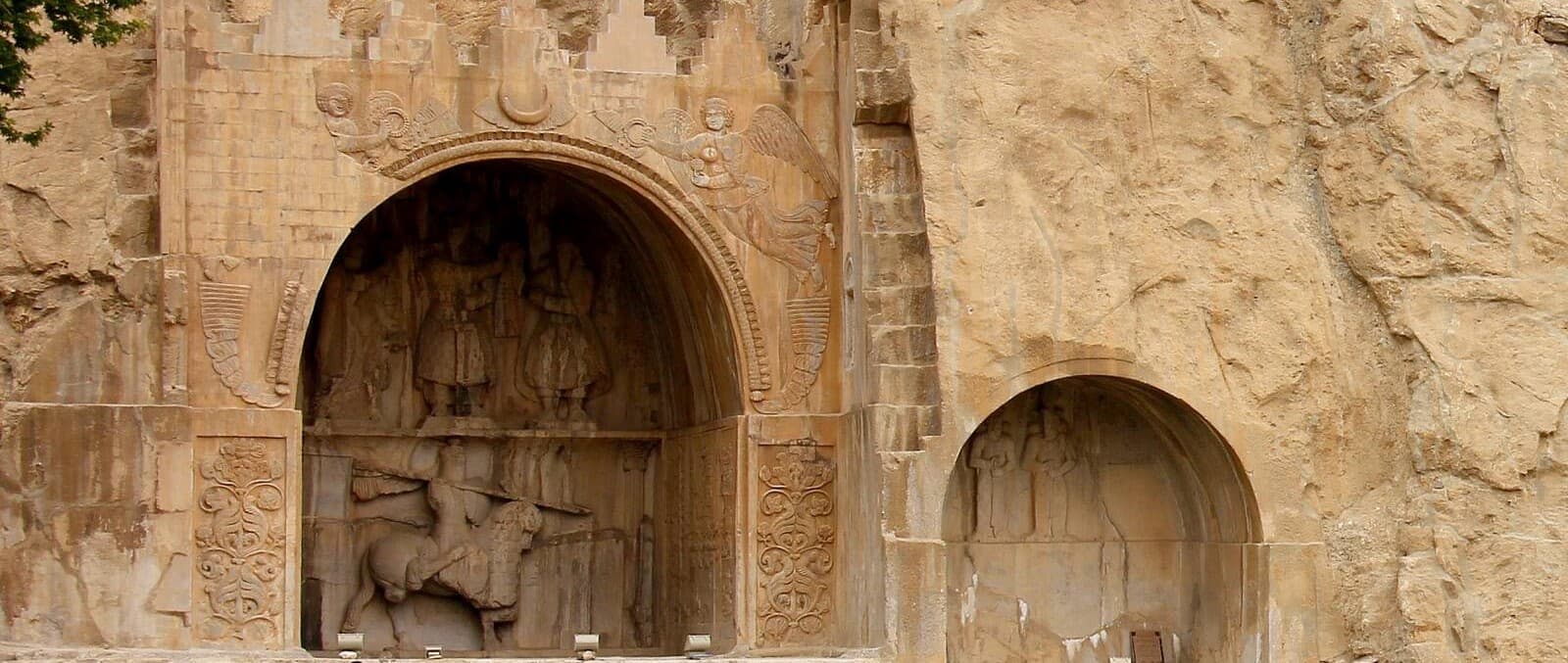
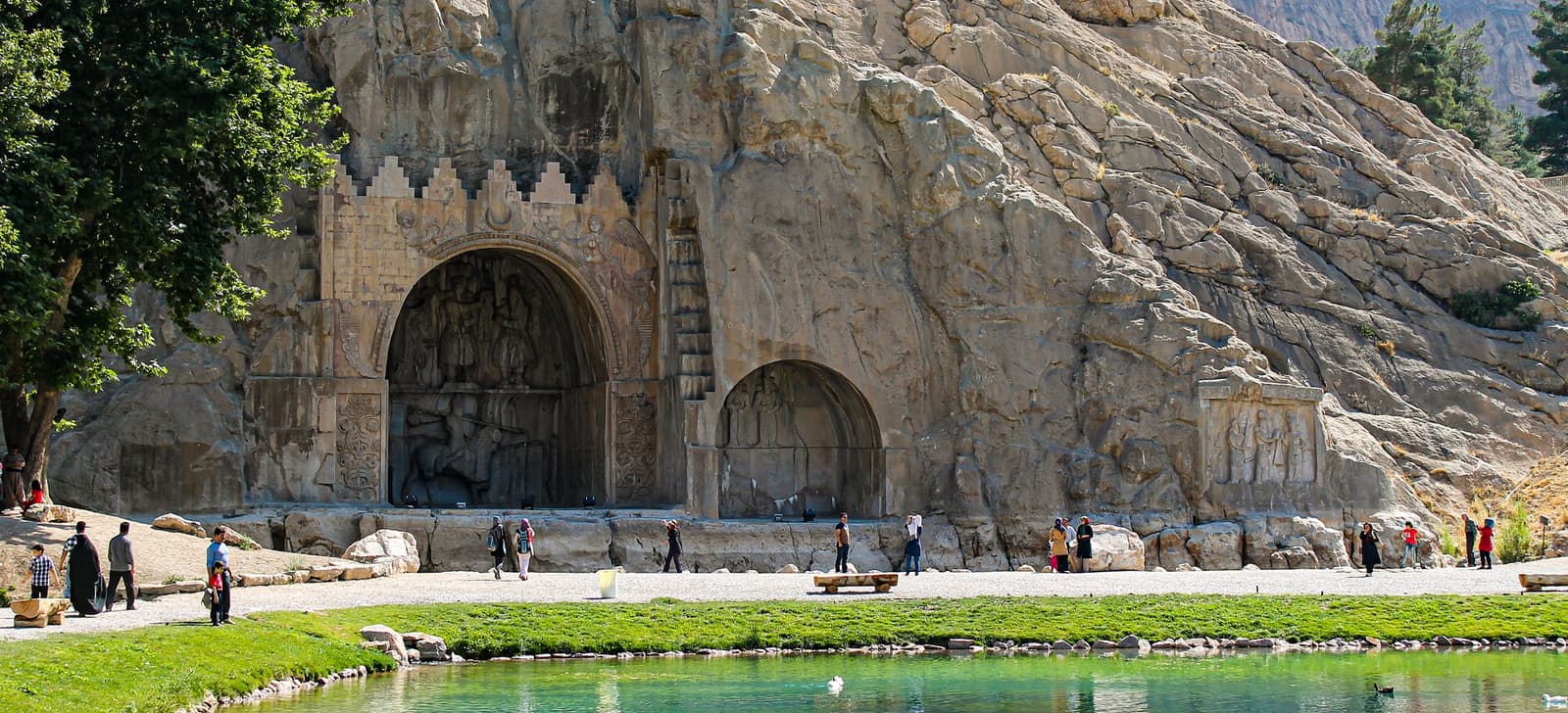
A short drive southwest, Taq-e Bostan unfolds like a rock-cut cathedral: a series of vaulted alcoves housing exquisitely detailed Sasanian reliefs that immortalize royal investiture ceremonies, divine symbolism, and the sumptuous drapery of ancient Persian court regalia, all backed by the whisper of natural springs.
Takieh Mo'aven ol-Molk
Back in the urban core, the Qajar-era Takieh Mo’aven ol-Molk beckons with its dazzling display of Persian tile work and mirror mosaics framing a central hall once used for dramatic ta’ziyeh passion plays; sunlight streaming through ornate stained-glass windows transforms every glazed tile into flickers of jewel-like color.
Covered Bazaar
Finally, the centuries-old Covered Bazaar serves as the beating heart of Kermanshah’s daily rhythm, a labyrinth of vaulted alleys where merchants peddle handwoven Kurdish carpets, silver filigree jewelry, aromatic spices, and pillowy kolācheh sweets amid the hum of haggling voices and the scent of freshly brewed chai.
Together, these four destinations weave past and present into a singular narrative—one of imperial ambition, spiritual ritual, artistic mastery, and enduring communal life—making Kermanshah not merely a stop on the map but a living museum of Iranian heritage.
Kermanshah Medical View
Kermanshah, has some of the most up-to-date hospitals with state-of-the-art equipment. Kermanshah’s surgeons are some of the most qualified, active in all medical areas. Kermanshah province is active in all medical areas.
Share:
Rate & Reviews
FAQs
The Bisotun Inscription, Iran’s sole UNESCO-listed monument in Kermanshah Province, sits about 30 km northeast of the city on Mount Bisotun’s limestone cliffs.
Kermanshah features an arid continental climate with cold, rainy winters and hot, sunny summers.
Start at Taq-e Bostan to marvel at Sasanian rock reliefs framed by vaulted arches and natural springs. Explore the Qajar-era Takieh Mo’aven ol-Molk for its mirror mosaics and ta’ziyeh performance hall, then wander the centuries-old Covered Bazaar to sample kolācheh sweets, browse Kurdish carpets, and soak in the vibrant market atmosphere.
Comments
Related Health Centers
No health centers found
Related Accommodations
No accommodations found
Related Articles
Contents
5
Excellent -1 Reviews
Traffic5
Expenses5
Security5
Pollution5
Cleanliness5
Public Transportation5
No review has been submitted yet. Be the first to share your experience.
No comments yet! Be the first to share your thoughts and start the conversation.