

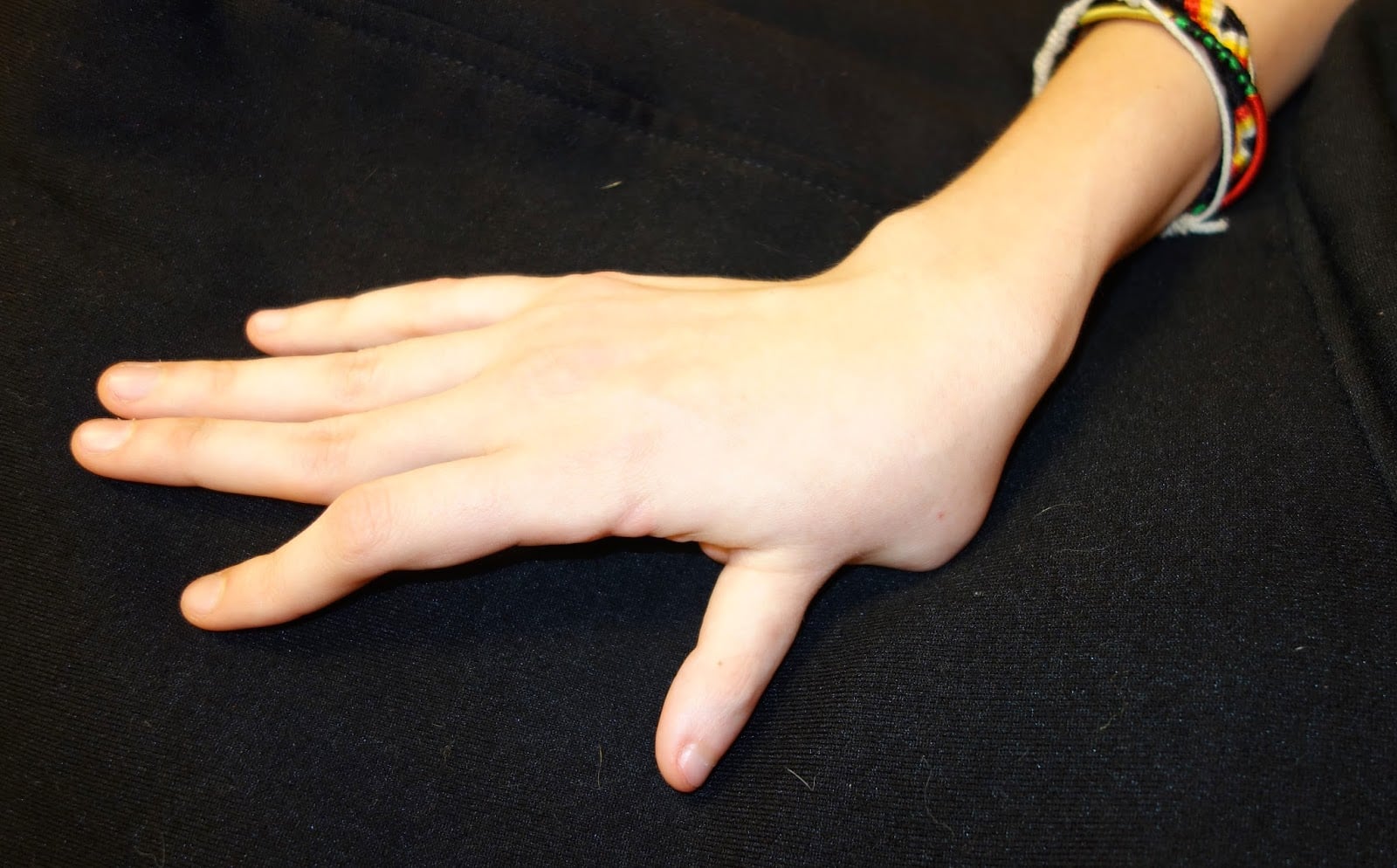
Congenital hand deformities are structural or functional abnormalities of the hand that are present at birth. They develop when the bones, joints, muscles, tendons, nerves, or soft tissues of the hand do not form normally during fetal development. These conditions vary significantly in severity. Some may cause only a minor difference in the appearance of a finger, while others can substantially affect hand movement, grip, sensation, and everyday activities.
Congenital hand deformities are relatively diverse, and each condition requires an individualized assessment. Some deformities can be treated with observation and occupational therapy, while others may benefit from splinting or reconstructive surgery.
Congenital Hand Deformities
Syndactyly
Syndactyly is one of the most common congenital hand differences. It occurs when two or more fingers are joined together. The fingers may be connected by skin and soft tissue, or, in more complex cases, by bones and other structures.
Syndactyly can affect one or several fingers and may occur in one or both hands. The extent of the connection varies from patient to patient. In some cases, the fingers are connected only near their bases, while in others, they may be joined along much of their length. Treatment depends on the severity and the functional effect. When separation is necessary, surgery can create individual fingers and improve hand function and appearance.
Polydactyly
Polydactyly refers to having an extra finger or thumb at birth. The additional digit can range from a small piece of soft tissue to a fully developed finger with bones, joints, and nails. Polydactyly may occur on the thumb side of the hand, the little-finger side, or, less commonly, in the central part of the hand. The type and location of the extra digit influence treatment.
Some patients may not require treatment if the additional digit does not interfere with function. In other cases, surgical removal or reconstruction may be recommended. Careful assessment is important because nerves, blood vessels, tendons, and bones may be shared between the duplicated digits.
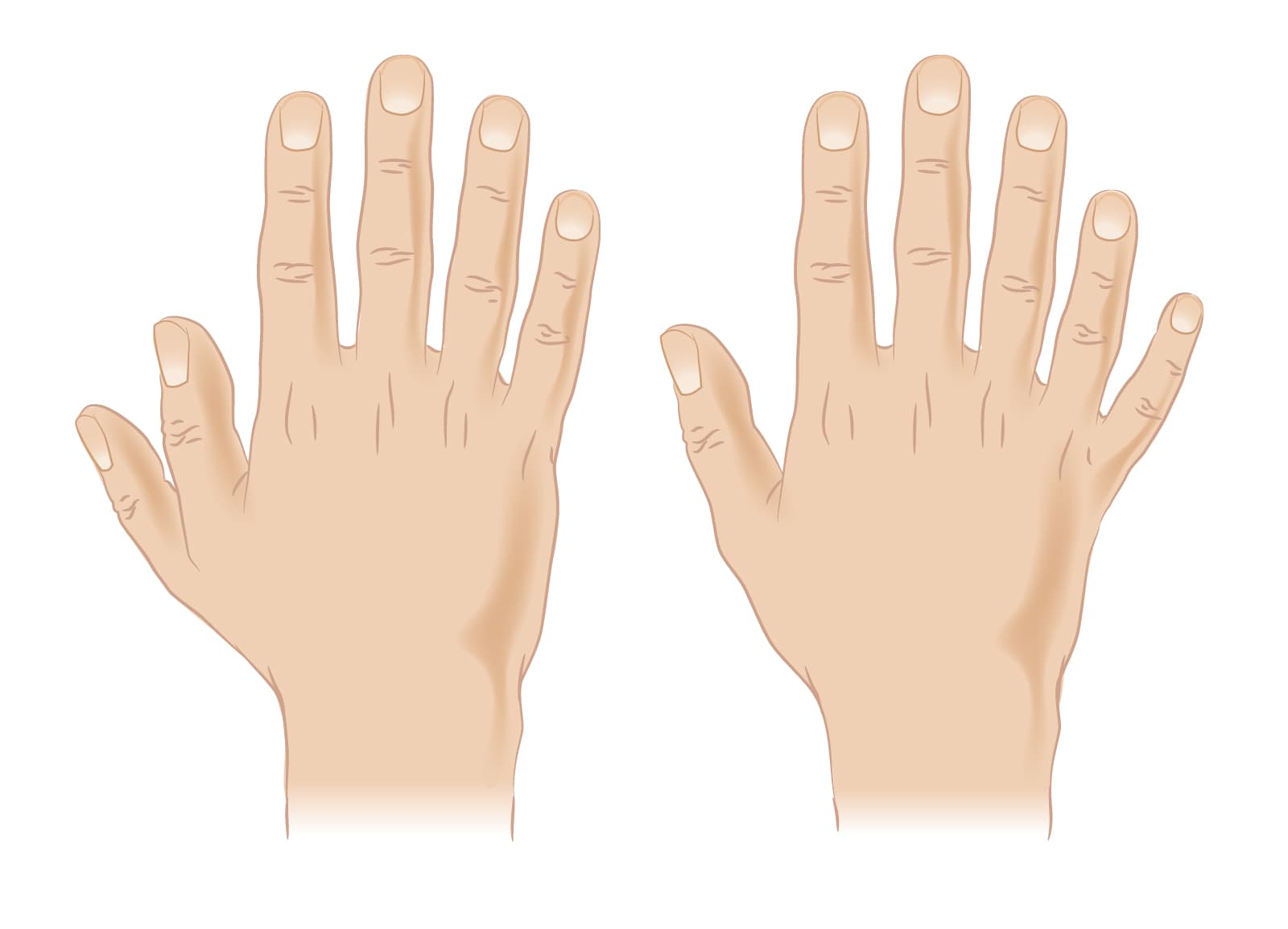
Clinodactyly
Clinodactyly is an abnormal sideways curvature of a finger. It most commonly affects the little finger and is caused by an abnormal shape or development of one of the finger bones.
Mild clinodactyly may have little effect on hand function and may simply be an aesthetic difference. More pronounced curvature can sometimes interfere with the movement or positioning of neighboring fingers. Treatment is not always necessary. When the deformity is severe or causes functional problems, a hand specialist may consider surgical correction.
Camptodactyly
Camptodactyly is characterized by a permanent or semi-permanent bending of one or more fingers, most often at the middle joint. The affected finger cannot be completely straightened. The condition can result from abnormalities involving muscles, tendons, ligaments, or other soft tissues around the finger. Its severity can vary considerably.
Treatment may include stretching exercises, splinting, and hand therapy, particularly when the deformity is mild. In more severe cases, surgery may be considered. Because aggressive treatment can sometimes lead to stiffness, management should be individualized.
Thumb Hypoplasia
The thumb plays a particularly important role in grasping and fine motor activities. Thumb hypoplasia occurs when the thumb is underdeveloped and smaller or weaker than normal. The condition can range from a mildly underdeveloped thumb with relatively good function to severe deficiency in which the thumb is almost completely absent.
Treatment depends on the degree of hypoplasia and the functionality of the thumb. Mild cases may benefit from therapy, while more significant abnormalities may require reconstructive procedures. In severe cases, surgeons may consider procedures that improve the hand's ability to grasp and pinch.
Radial Club Hand
Radial club hand, also known as radial longitudinal deficiency, is a congenital condition involving underdevelopment of the thumb side of the forearm and hand. The radius bone may be shortened or absent, and the wrist can become noticeably deviated toward the thumb side. The thumb may also be underdeveloped or absent.
The condition can affect the overall alignment, strength, and function of the upper limb. Treatment depends on severity and may involve stretching, splinting, therapy, and reconstructive surgery. Because radial club hand can be associated with other congenital conditions, children may require a comprehensive medical assessment.
Symbrachydactyly
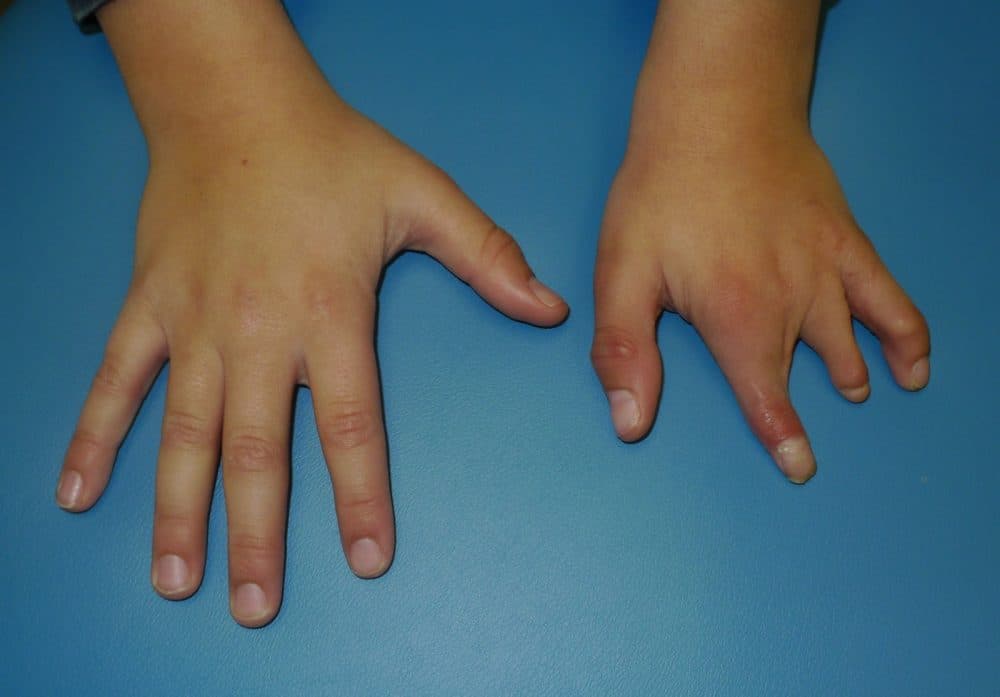
Symbrachydactyly is a congenital hand condition in which the fingers are unusually short, malformed, or partially absent. Some fingers may also be connected by soft tissue. The condition varies considerably between individuals. One person may have shortened fingers with relatively good hand function, while another may have significant absence of fingers.
Treatment focuses on maximizing useful hand function rather than simply creating a normal appearance. Depending on the individual anatomy, treatment can involve reconstructive surgery, finger lengthening, separation of tissues, prosthetic options, and occupational therapy.
Ectrodactyly (Split-Hand Deformity)
Ectrodactyly, commonly known as split-hand deformity, is characterized by the absence or underdevelopment of one or more central fingers, producing a distinctive cleft in the middle of the hand. The severity can range from a relatively small central gap to a major division of the hand. In some patients, the thumb and little finger are present while the central digits are absent or severely underdeveloped.
Treatment is individualized according to the patient's anatomy and functional needs. Reconstructive surgery may be considered when it can improve grasp, pinch, or other important hand functions.
Macrodactyly
Macrodactyly occurs when one or more fingers are significantly larger than the surrounding digits. The enlargement can involve the bones, skin, nerves, and soft tissues. The condition may be present at birth and can sometimes become more noticeable as the child grows. In some cases, the affected digit continues to grow disproportionately.
Macrodactyly can interfere with movement, grip, and the ability to perform everyday tasks. Treatment depends on the extent of enlargement and may include surgical reduction or other reconstructive procedures.
Brachydactyly
Brachydactyly refers to unusually short fingers or thumbs caused by shortened bones. It can affect one digit, several digits, or both hands. In many cases, brachydactyly is primarily an aesthetic difference and does not significantly interfere with hand function. However, more pronounced forms can affect grip or finger movement.
Treatment is not always necessary. When functional or significant cosmetic concerns exist, a specialist can assess whether reconstructive surgery or other interventions may be beneficial.
Congenital Absence of Fingers
Congenital absence of fingers, sometimes described as adactyly when an entire digit or multiple digits are absent, occurs when one or more fingers fail to develop during fetal development. The extent of absence varies considerably. A patient may be missing a single finger or several digits, and the remaining fingers may also have abnormalities.
Treatment aims to optimize the function of the remaining hand. Depending on the anatomy, options may include reconstructive surgery, prosthetic devices, or specialized occupational therapy. Rather than focusing exclusively on restoring appearance, treatment planning generally considers the patient's ability to grasp, pinch, manipulate objects, and perform daily activities.
Congenital Hand Contractures
Congenital hand contractures occur when one or more fingers or joints are restricted in their normal range of movement from birth. The affected finger may remain bent or positioned abnormally. Contractures can result from abnormalities involving muscles, tendons, joints, connective tissue, or the development of the hand itself. They may occur as an isolated condition or alongside other congenital abnormalities.
Treatment depends on the cause and severity. Stretching, splinting, physical or occupational therapy may be appropriate in some cases. Surgery may be considered when a significant structural abnormality prevents useful movement.
How Are Congenital Hand Deformities Diagnosed?
Diagnosis usually begins with a physical examination. A hand specialist evaluates the shape, alignment, movement, strength, and function of the affected hand.
X-rays are commonly used to examine the bones and determine whether digits or joints have developed normally. In more complex cases, additional imaging or investigations may be necessary, particularly when abnormalities involving tendons, nerves, or other parts of the upper limb are suspected.
The child's overall health and the presence of other congenital conditions may also influence the diagnostic process.
How Are Congenital Hand Deformities Treated?
There is no single treatment that applies to every congenital hand deformity. Management depends on the specific condition, severity, age of the patient, anatomy of the hand, and effect on function. Treatment may include:
Observation for mild cases
Occupational or physical therapy
Splinting
Reconstructive surgery
Tendon or ligament procedures
Bone reconstruction or correction
Finger separation or removal of an additional digit
Prosthetic devices in selected cases
The primary goal is generally to create the most functional hand possible, rather than achieving a perfectly typical appearance.
Conclusion
Congenital hand deformities encompass a broad range of conditions, from relatively mild differences such as clinodactyly and brachydactyly to more complex abnormalities such as radial club hand, symbrachydactyly, and ectrodactyly. Syndactyly and polydactyly are among the most recognizable congenital hand differences, while conditions such as thumb hypoplasia and congenital contractures can have a particularly important impact on hand function. Treatment should always be individualized. Some children may require only observation or therapy, while others can benefit from reconstructive surgery.
Read More