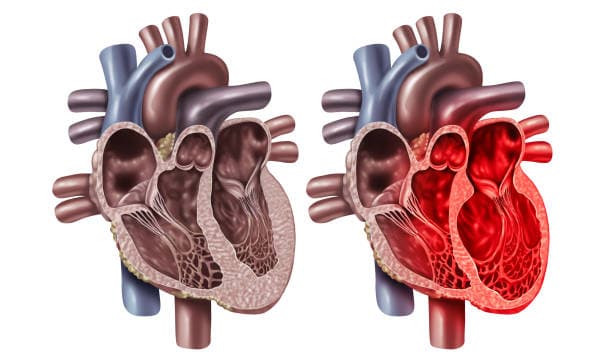
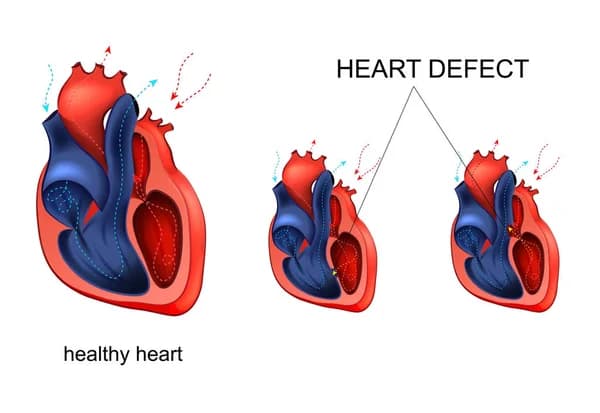
Septal defects, such as atrial septal defects (ASDs) and ventricular septal defects (VSDs), involve holes in the walls separating the heart's chambers. These are typically repaired through surgical or catheter-based techniques. Surgical repair involves making an incision in the chest and using a patch or stitches to close the hole. Catheter-based procedures use a thin tube inserted through a blood vessel to deliver a closure device to the defect, which is then deployed to seal the hole.
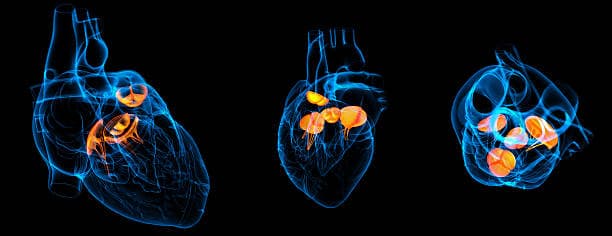
Valve defects like pulmonary valve stenosis or aortic valve stenosis are addressed through procedures that either repair or replace the affected valve. In some cases, balloon valvuloplasty is performed, where a balloon-tipped catheter is threaded through a blood vessel to the narrowed valve. The balloon is inflated to widen the valve opening, improving blood flow. For more severe cases, valve replacement surgery may be necessary, involving the implantation of a mechanical or biological valve.
Tetralogy of Fallot, a complex CHD consisting of four defects, requires a combination of surgical procedures. The ventricular septal defect is closed with a patch, and the pulmonary stenosis is relieved by removing the obstructing muscle tissue or using a patch to widen the pulmonary artery. This restores normal blood flow and improves oxygenation.
In cases of transposition of the great arteries (TGA), a surgical procedure called an arterial switch operation is performed. This involves repositioning the major arteries—the aorta and the pulmonary artery—to their correct locations, ensuring that oxygen-rich blood is properly circulated throughout the body. This surgery is typically done in the first few weeks of life to prevent severe complications.
Coarctation of the aorta, a narrowing of the aorta, is repaired by surgically removing the narrowed section and reconnecting the healthy ends. In some cases, a patch or a stent may be used to widen the narrowed area. This procedure restores normal blood flow from the heart to the body and reduces the risk of high blood pressure and heart damage.
Hypoplastic left heart syndrome (HLHS) is addressed through a series of staged surgeries. The initial procedure, usually performed in the first few days of life, is called the Norwood operation, which redirects blood flow to ensure sufficient oxygenation. This is followed by the Glenn procedure at 4 to 6 months of age and the Fontan procedure at 2 to 3 years of age, which further improve blood flow and heart function.
Patent ductus arteriosus (PDA) is repaired through minimally invasive catheter-based techniques or surgical ligation. In catheter-based closure, a device is threaded through a blood vessel to the PDA and deployed to seal the duct. Surgical ligation involves making a small incision to tie off or clip the PDA, stopping abnormal blood flow.