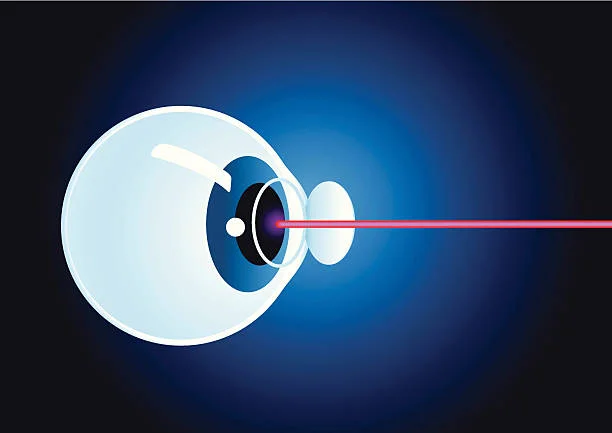
Lasik Surgery
How is LASIK Surgery performed?
LASIK stands for laser-assisted in situ keratomileusis, which means using a laser to reshape the cornea, the clear front part of the eye. The cornea is responsible for bending or refracting light rays onto the retina, the light-sensitive tissue at the back of the eye. When the cornea is too curved, too flat, or uneven, the light rays do not focus properly on the retina, causing blurred vision.
LASIK surgery aims to correct this refractive error by creating a thin flap in the cornea, lifting it, and using a laser to remove some corneal tissue and change its shape. Then, the flap is put back in place and allowed to heal. The surgery is usually done as an outpatient procedure, meaning that the patient can go home the same day. The surgery takes about 15 minutes per eye and is performed under local anesthesia, meaning that the patient is awake but the eye is numbed. The patient may feel some pressure or discomfort during the surgery, but not pain.
After the surgery, the patient may experience some temporary side effects, such as dry eyes, glare, halos, or double vision. These usually improve over time, but some people may need additional treatment or medication to manage them. Most people who have LASIK surgery achieve 20/20 vision or better, which works well for most activities. However, some people may still need glasses or contact lenses for certain tasks, such as driving at night or reading.
Is LASIK eye surgery safe?
LASIK involves using a laser to reshape the cornea, the clear front part of the eye. By changing the shape of the cornea, LASIK can improve the way light rays are focused on the retina, the light-sensitive tissue at the back of the eye, resulting in clearer vision. However, like any surgical procedure, LASIK has some potential risks and complications that should be considered before deciding to have it. Some of the common side effects of LASIK eye surgery include dry eyes, light sensitivity, glare, halos, and vision fluctuations. These usually improve over time, but some people may need additional treatment or medication to manage them. Some of the rare but serious complications of LASIK eye surgery include infection, scarring, reduced vision, vision loss, astigmatism, flap problems, and regression. These may require further surgery or correction with glasses or contact lenses. Therefore, it is important to consult with an eye doctor before having LASIK eye surgery and to follow the instructions and recommendations after the surgery. LASIK eye surgery is not suitable for everyone, and there are some factors that may affect the outcome and safety of the procedure. These include the degree and type of refractive error, the thickness and shape of the cornea, the age and health of the patient, and the expectations and goals of the patient. LASIK eye surgery is a safe and effective option for vision correction for most people who meet the criteria and have realistic expectations. However, it is not a risk-free or guaranteed solution, and it may not eliminate the need for glasses or contact lenses completely. Therefore, it is essential to weigh the benefits and risks of LASIK eye surgery carefully and to discuss them with a qualified eye doctor.