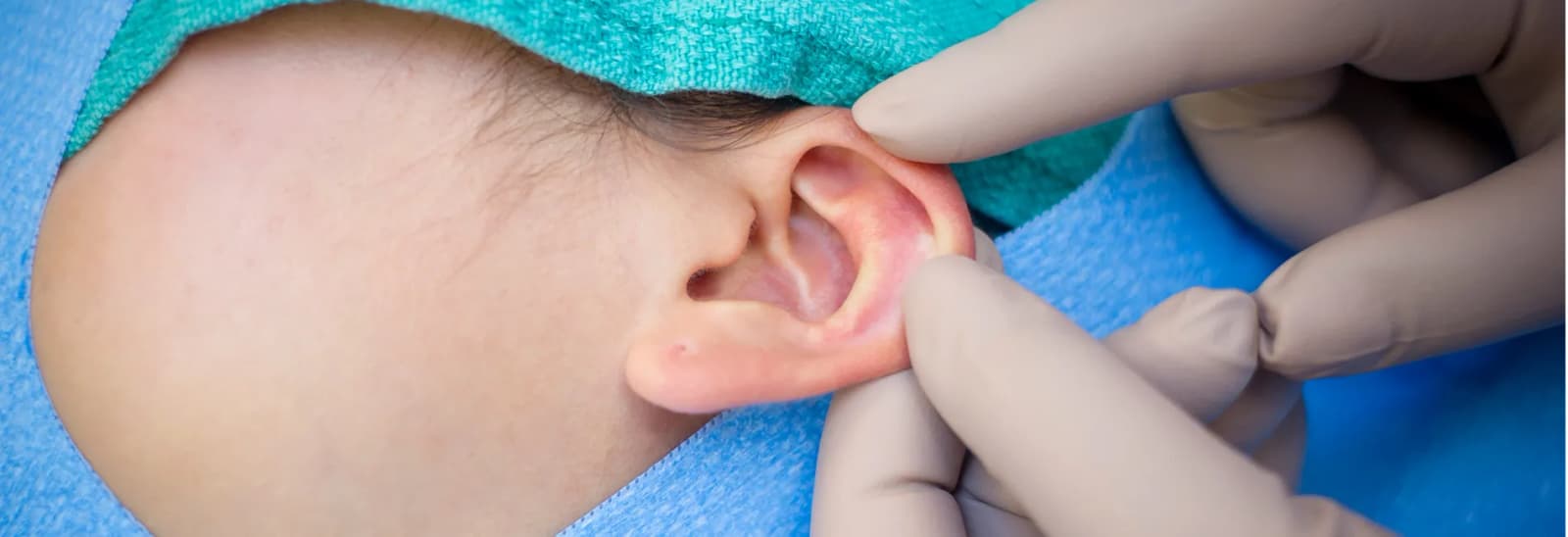
Overview
Otoplasty or cosmetic ear surgery is a procedure performed on the visible portion of the outer ear (the auricle). The auricle starts development before birth and continues after birth, but if it doesn’t develop properly, you may need an otoplasty to correct the size, positioning, or shape of your ears. Some choose this surgery because the way their ears stick out of their head bothers them. Usually, otoplasty can be done after the age of 5, since your ears have reached their full size. Otoplasty basically pins the ears back to a natural position which restores proper structure and shape to the ears.
About Otoplasty (Ear Surgery)
Otoplastyis often performed on children and teens to correct protruding ears. As a teen or adult, candidates should be non-smokers with generally good health. Children who wish to have this surgery should be over 5 years of age, not suffer from chronic ear infections, and be in generally good health. Otoplasty can help those whose:
Ear or ears stick out too far from their head
Ears are large in proportion to their head
Previous surgery left them unsatisfied
The otoplasty surgery is typically done on both ears to optimize symmetry. You should keep in mind that an otoplasty won’t change the location of your ears nor will it alter your hearing abilities.
What is Otoplasty?
Otoplasty is a type of cosmetic surgery that aims to improve the appearance of the ears. It can change the size, shape, or position of the ears, or correct any deformities caused by injury or birth defects. Otoplasty can also help people who are unhappy with how far their ears stick out from their head, by pinning them back closer to the skull. This is also known as pinnaplasty or ear pinning.
Otoplasty is usually performed under local or general anesthesia, depending on the age and preference of the patient. The surgery involves making a small incision behind the ear, where it is less visible, and reshaping the ear cartilage by cutting, folding, or suturing it. The incision is then closed with stitches and a bandage is applied around the head to protect the ears and keep them in place. The surgery can take between one to two hours, and the patient can usually go home the same day or the next day.
Otoplasty is generally a safe and effective procedure, with most patients being satisfied with the results. However, as with any surgery, there are some risks and complications that need to be considered. These include bleeding, infection, scarring, asymmetry, overcorrection, under-correction, recurrence, and loss of sensation or function in the ears. Some of these complications may require further surgery to correct. Therefore, it is important to choose a qualified and experienced surgeon and to follow their instructions before and after the surgery.