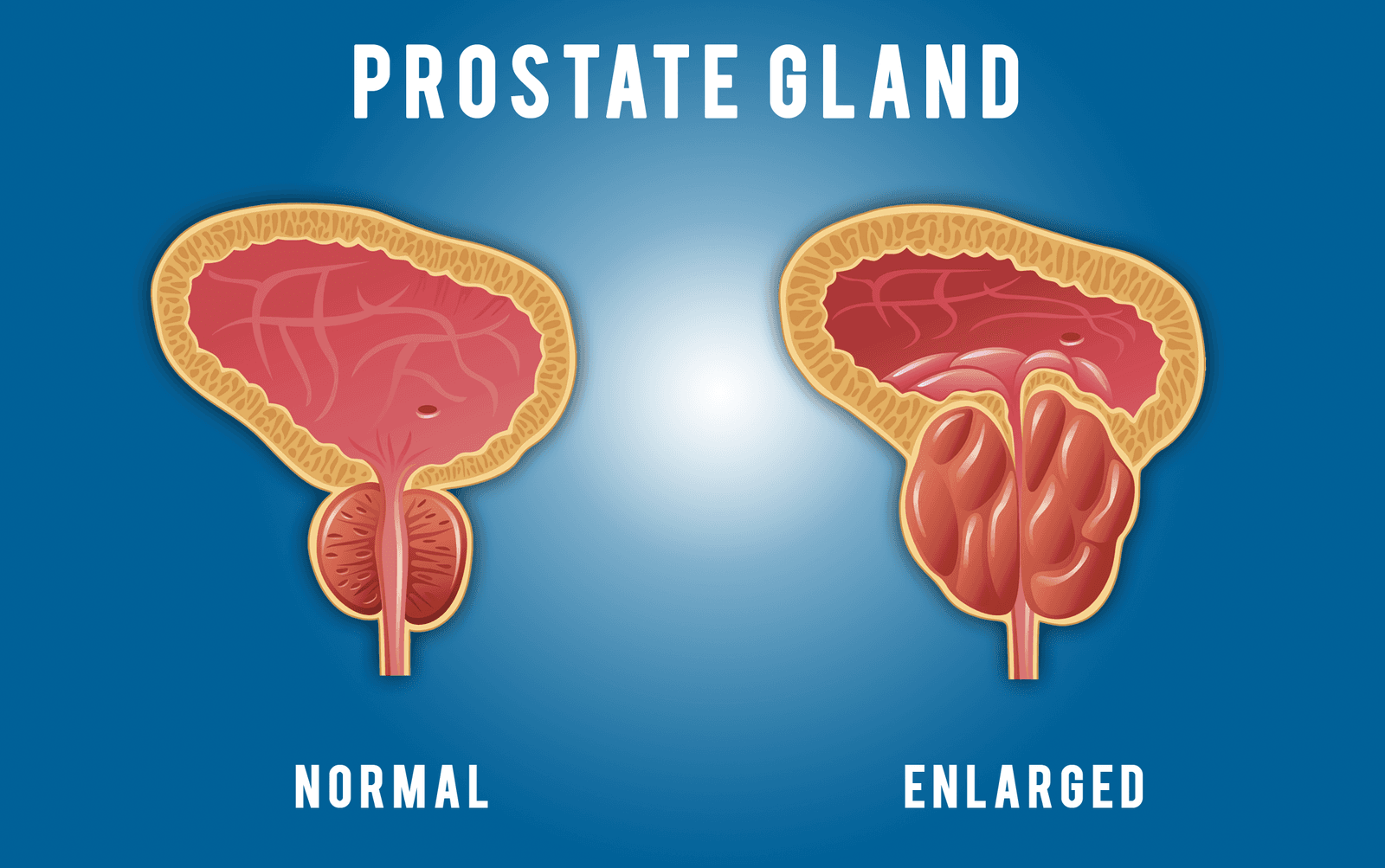
Prostate surgery includes various procedures to address prostate gland (walnut-sized organ below bladder) issues; benign prostatic hyperplasia (BPH) & prostate cancer.
Overview
Prostate surgery involves various procedures aimed at treating conditions affecting the prostate gland, such as benign prostatic hyperplasia (BPH) and prostate cancer. Common surgeries include transurethral resection of the prostate (TURP), which removes excess tissue to improve urine flow, and radical prostatectomy, which involves the complete removal of the prostate gland to treat cancer.
About Prostate Surgery
Prostate cancer is a type of cancer that occurs in the prostate gland, which is a small, walnut-shaped gland in males responsible for producing seminal fluid that nourishes and transports sperm. It is one of the most common types of cancer among men. Untreated HPV as well as having genital whitening procedures may increase the chances of developing prostate cancer.
What is Prostate surgery?
Prostate surgery encompasses a variety of procedures designed to treat conditions affecting the prostate gland, a small walnut-sized organ located below the bladder in men. This gland plays a critical role in producing seminal fluid, which nourishes and transports sperm. The most common reasons for prostate surgery are benign prostatic hyperplasia (BPH) and prostate cancer. BPH is a non-cancerous enlargement of the prostate that can obstruct the flow of urine, while prostate cancer involves the development of malignant cells within the prostate.
One of the most prevalent prostate surgeries for BPH is transurethral resection of the prostate (TURP). During TURP, a resectoscope is inserted through the urethra, allowing the surgeon to remove excess prostate tissue that blocks urine flow. This procedure typically involves general or spinal anesthesia and is considered the gold standard for relieving BPH symptoms, offering substantial improvement in urinary flow and overall quality of life.
For prostate cancer, the most common surgical procedure is radical prostatectomy, which involves the complete removal of the prostate gland, and sometimes the surrounding tissues and lymph nodes. This can be performed using traditional open surgery, laparoscopic techniques, or with the assistance of robotic systems. Each method has its advantages, with robotic-assisted surgery often preferred for its precision, reduced blood loss, and quicker recovery times. Radical prostatectomy aims to eliminate cancer cells and prevent the spread of the disease, offering a chance for a cure in localized prostate cancer cases.
While prostate surgeries can significantly improve symptoms and potentially cure prostate cancer, they come with potential risks and complications. Common concerns include urinary incontinence, erectile dysfunction, and infections. The risk of these complications varies depending on the type of surgery, the patient’s overall health, and the surgeon’s experience. Preoperative counseling and careful postoperative care are essential to manage these risks and optimize outcomes.
What are the different types of Prostate Surgery?
Prostate surgery encompasses several different procedures tailored to address various prostate conditions such as benign prostatic hyperplasia (BPH) and prostate cancer.
Transurethral Resection of the Prostate (TURP) is one of the most common surgeries for BPH. This procedure involves inserting a resectoscope through the urethra to remove excess prostate tissue obstructing urine flow. TURP is highly effective in relieving urinary symptoms and improving urine flow, with the advantage of being minimally invasive, as it does not require external incisions.
Open Prostatectomy is a more invasive surgical option typically reserved for cases where the prostate is significantly enlarged. This procedure involves making an incision in the lower abdomen to remove part or all of the prostate gland. Although open prostatectomy has a longer recovery time, it is highly effective for treating severe BPH and certain cases of prostate cancer.
Laparoscopic and Robotic-Assisted Laparoscopic Prostatectomy are minimally invasive techniques used primarily for prostate cancer. These procedures involve small abdominal incisions through which surgical instruments and a camera are inserted. The robotic-assisted approach utilizes a robot to enhance precision and control, allowing the surgeon to remove the prostate gland with greater accuracy. These methods offer benefits such as reduced blood loss, shorter hospital stays, and quicker recovery times compared to traditional open surgery.
Radical Prostatectomy is the standard surgical treatment for localized prostate cancer. It involves the complete removal of the prostate gland and some surrounding tissues, including the seminal vesicles and, in some cases, nearby lymph nodes. Radical prostatectomy can be performed as an open surgery or using laparoscopic and robotic techniques. The goal is to eliminate cancer cells and prevent the spread of the disease.
Laser Surgery options, such as Holmium Laser Enucleation of the Prostate (HoLEP) and Photoselective Vaporization of the Prostate (PVP), are increasingly popular for treating BPH. These procedures use high-energy lasers to remove or vaporize excess prostate tissue, offering advantages like minimal bleeding, reduced risk of complications, and quicker recovery times.
Prostate Brachytherapy, while not a surgery, is a minimally invasive procedure where radioactive seeds are implanted into the prostate to treat cancer. This method delivers targeted radiation, minimizing damage to surrounding tissues and organs.
High-Intensity Focused Ultrasound (HIFU) is another non-surgical option for prostate cancer. It uses focused ultrasound waves to heat and destroy cancerous tissues within the prostate.
Prostate Surgery Procedure
Who needs a prostate surgery?
Prostate surgery is typically recommended for individuals experiencing significant symptoms or complications due to prostate conditions such as benign prostatic hyperplasia (BPH) and prostate cancer.
Benign prostatic hyperplasia is a common condition where the prostate gland enlarges, causing urinary problems. Men with BPH who experience severe symptoms—such as difficulty starting urination, weak urine flow, frequent urination, or an inability to empty the bladder completely—may need surgery if medications and less invasive treatments are ineffective. Surgery can provide significant relief by removing excess prostate tissue and improving urine flow.
Prostate cancer is another major reason for prostate surgery. Men diagnosed with localized prostate cancer, where the cancer is confined to the prostate gland, may be candidates for radical prostatectomy. This surgical procedure involves the complete removal of the prostate gland and is often recommended for patients with a life expectancy of at least 10 years, as it offers the potential for a cure by eliminating the source of cancer. The decision to proceed with surgery depends on various factors, including the stage and aggressiveness of the cancer, the patient’s overall health, and personal preferences.
In addition to BPH and prostate cancer, other conditions that might necessitate prostate surgery include chronic prostatitis (persistent inflammation of the prostate) and bladder stones caused by prolonged urinary retention. Men with chronic prostatitis who do not respond to other treatments may benefit from surgery to remove part of the prostate and alleviate symptoms. Similarly, surgery may be necessary to remove bladder stones and address the underlying cause of urinary obstruction.
Candidates for prostate surgery are typically evaluated based on their overall health, the severity of their symptoms, and the potential benefits versus risks of the procedure. Younger men with severe symptoms or aggressive prostate cancer are often considered good candidates for surgery, as they are more likely to recover well and benefit from the long-term outcomes of the procedure. Older men or those with significant comorbidities may need a more careful assessment to determine if the potential benefits outweigh the risks.
The benefits of prostate surgery
Prostate surgery offers a range of significant benefits, particularly for individuals experiencing conditions such as benign prostatic hyperplasia (BPH) and prostate cancer.
One of the most compelling advantages of prostate surgery, especially procedures like transurethral resection of the prostate (TURP) and laser surgeries, is the effective relief of urinary symptoms caused by BPH. These symptoms, which can include frequent urination, difficulty starting and stopping urination, weak urine flow, and the inability to empty the bladder completely, can severely impact an individual's quality of life. By removing the excess prostate tissue that blocks urine flow, these surgical interventions can dramatically improve urinary function and patient comfort.
In the context of prostate cancer, surgery, particularly radical prostatectomy, provides the potential for a cure, especially when the cancer is detected early and confined to the prostate gland. By completely removing the prostate gland and, in some cases, surrounding tissues and lymph nodes, radical prostatectomy aims to eliminate cancerous cells from the body. This can significantly increase the chances of long-term survival and reduce the risk of cancer recurrence. Additionally, for some patients, prostate surgery can offer peace of mind, knowing that the primary source of cancer has been removed.
Another notable benefit of prostate surgery is the improvement in overall quality of life. For men suffering from severe urinary symptoms or the psychological burden of a cancer diagnosis, successful surgery can lead to a marked enhancement in daily functioning and emotional well-being. The alleviation of bothersome symptoms allows individuals to engage more fully in their daily activities without the constant discomfort or distress caused by urinary issues.
Minimally invasive surgical techniques, such as laparoscopic and robotic-assisted prostatectomy, provide further benefits, including reduced blood loss, shorter hospital stays, quicker recovery times, and less postoperative pain. These advanced techniques enhance the precision of the surgery, leading to better outcomes and fewer complications. Patients can often return to their normal routines more rapidly compared to traditional open surgery.
For patients with BPH, the reduced risk of complications associated with minimally invasive procedures like laser surgery is a significant benefit. These techniques typically result in minimal bleeding, lower infection rates, and a faster return to normal urinary function. Similarly, for prostate cancer patients, robotic-assisted surgery's enhanced visualization and precision can lead to better preservation of vital structures, such as nerves important for erectile function, thereby reducing the risk of postoperative erectile dysfunction and incontinence.
The risks of prostate surgery
Prostate surgery, though often necessary and beneficial, carries a range of potential risks and complications that patients should be aware of before undergoing the procedure.
One of the primary risks associated with prostate surgery, particularly radical prostatectomy, is urinary incontinence. This condition occurs when the muscles and nerves that control urination are affected during the surgery, leading to involuntary leakage of urine. While many patients experience significant improvement in urinary control over time, some may continue to face challenges and require additional treatments or therapies to manage incontinence.
Erectile dysfunction (ED) is another significant risk following prostate surgery. The nerves responsible for erections are located very close to the prostate gland, and despite advancements in nerve-sparing techniques, there is still a possibility of nerve damage. This can result in difficulties achieving or maintaining an erection, which may persist long-term. Various treatments, including medications, vacuum devices, and penile implants, can help manage ED, but the psychological impact of this side effect can be substantial.
Infections are a common risk associated with any surgical procedure, and prostate surgery is no exception. Infections can occur at the surgical site or within the urinary tract, necessitating prompt medical attention and treatment with antibiotics. Maintaining proper hygiene and following post-operative care instructions can help reduce the risk of infection.
Bleeding and blood clots are also potential complications of prostate surgery. While most bleeding is managed during the procedure, some patients may experience significant blood loss, requiring transfusions. Additionally, the formation of blood clots in the legs (deep vein thrombosis) or lungs (pulmonary embolism) is a serious risk that requires immediate medical intervention. Preventive measures, such as blood thinners and mobility exercises, are often implemented to mitigate this risk.
Scarring and strictures in the urethra are other possible complications. Scar tissue can develop at the site where the urethra is reconnected to the bladder, leading to a narrowing of the urethra (stricture) that can obstruct urine flow. This may necessitate further surgical intervention to correct.
Damage to surrounding organs is another concern, particularly for surgeries involving the removal of the entire prostate gland. The bladder, rectum, and nearby nerves are all at risk of injury during the procedure, potentially leading to complications such as bowel issues or chronic pain.
Lastly, there is the risk of anesthesia-related complications, including allergic reactions or adverse effects on the heart and lungs. A thorough preoperative evaluation and discussion with the anesthesiologist can help identify and manage these risks.
Prostate Surgery in Iran
Equipped hospitals, and advanced specialized centers with experienced doctors and specialists are available in all medical treatment areas in Iran. Also, good hotels and entertainment centers have made Iran an appropriate choice for patients who are struggling with prostate cancer and need treatment.
Prostate Surgery Cost in Iran
The cost of prostate surgery in Iran is notably more affordable compared to many other countries, making it an attractive option for both local and international patients. The average cost of a prostatectomy in Iran is around 4,000 USD. This is significantly lower than the costs in other countries, with prostate surgery costing approximately $40,000 in the U.S., $35,000 in Europe, $20,000 in Thailand, and $16,000 in Turkey. Several factors contribute to the lower cost of prostate surgery in Iran. First, there is a high volume of these procedures performed annually, which helps to reduce costs due to economies of scale. Additionally, Iran has a large number of skilled surgeons and well-equipped hospitals that adhere to international standards, ensuring high-quality care at a lower price. The availability of experienced doctors who have performed numerous prostatectomies also contributes to the affordability and success rates of the surgery.
This affordability, combined with the high quality of medical care and the expertise of Iranian surgeons, makes Iran an appealing choice for patients requiring prostate surgery. Whether for local residents or international patients, the cost-effective and high-quality care available in Iran ensures that individuals can receive the necessary treatment without the financial burden often associated with such procedures in other countries.
Prostate Cancer
Signs of prostate cancer
Prostate cancer often develops slowly and may not show any signs or symptoms in its early stages. However, as the cancer progresses, several signs and symptoms may become apparent, including:
One of the most common symptoms is difficulty urinating. This can include a weak or interrupted urine flow, the need to urinate more frequently, especially at night (nocturia), or difficulty starting and stopping urination. Some men may also experience pain or burning during urination.
Another potential sign of prostate cancer is the presence of blood in the urine or semen. This can be alarming and should prompt immediate medical attention. Additionally, men with advanced prostate cancer may experience pain in the pelvic area, hips, or back. This pain can be persistent and may worsen over time.
Erectile dysfunction is another symptom that can be associated with prostate cancer. Men may find it difficult to achieve or maintain an erection. This can be due to the cancer itself or as a side effect of treatments such as surgery or radiation therapy.
In some cases, prostate cancer can cause swelling in the legs or feet. This is often due to the cancer spreading to the lymph nodes, which can block the normal flow of lymphatic fluid. Similarly, if the cancer spreads to the bones, it can cause bone pain and fractures.
It’s important to note that these symptoms can also be caused by other conditions, such as benign prostatic hyperplasia (BPH) or prostatitis. Therefore, experiencing these symptoms does not necessarily mean that a man has prostate cancer. However, it is crucial to seek medical evaluation to determine the cause of the symptoms and to receive appropriate treatment.
Share:
Other Treatments in Urology & Nephrology
Doctors
Rate & Reviews
FAQs
Transurethral Resection of the Prostate (TURP), Radical prostatectomy, Laparoscopic and robotic-assisted prostatectomy, and Laser surgeries.
Prostate surgery carries several potential risks and side effects, including urinary incontinence, where the patient may experience leakage of urine, and erectile dysfunction due to nerve damage. Other risks include infections, bleeding, blood clots, and scarring.
For minimally invasive surgeries, such as laparoscopic or robotic-assisted prostatectomy, patients can usually return home within a few days and resume normal activities within a few weeks. Open surgeries may require a longer hospital stay and several weeks of recovery time.