Skin Cancer Diagnosis Process
Cause of Skin Cancer
Skin cancer is primarily caused by overexposure to ultraviolet (UV) radiation from the sun, tanning beds, or sunlamps. UV radiation damages the DNA in skin cells, leading to mutations that can cause the cells to grow uncontrollably and form malignant tumors. There are three main types of skin cancer: basal cell carcinoma, squamous cell carcinoma, and melanoma. Basal cell carcinoma, the most common type, often appears as a pearly or waxy bump on sun-exposed areas like the face and neck. Squamous cell carcinoma typically manifests as a firm, red nodule or a flat lesion with a scaly, crusted surface. Melanoma, the most dangerous form, can develop anywhere on the body and often starts as a mole that changes in color, size, or feel. The risk of developing skin cancer is influenced by several factors.
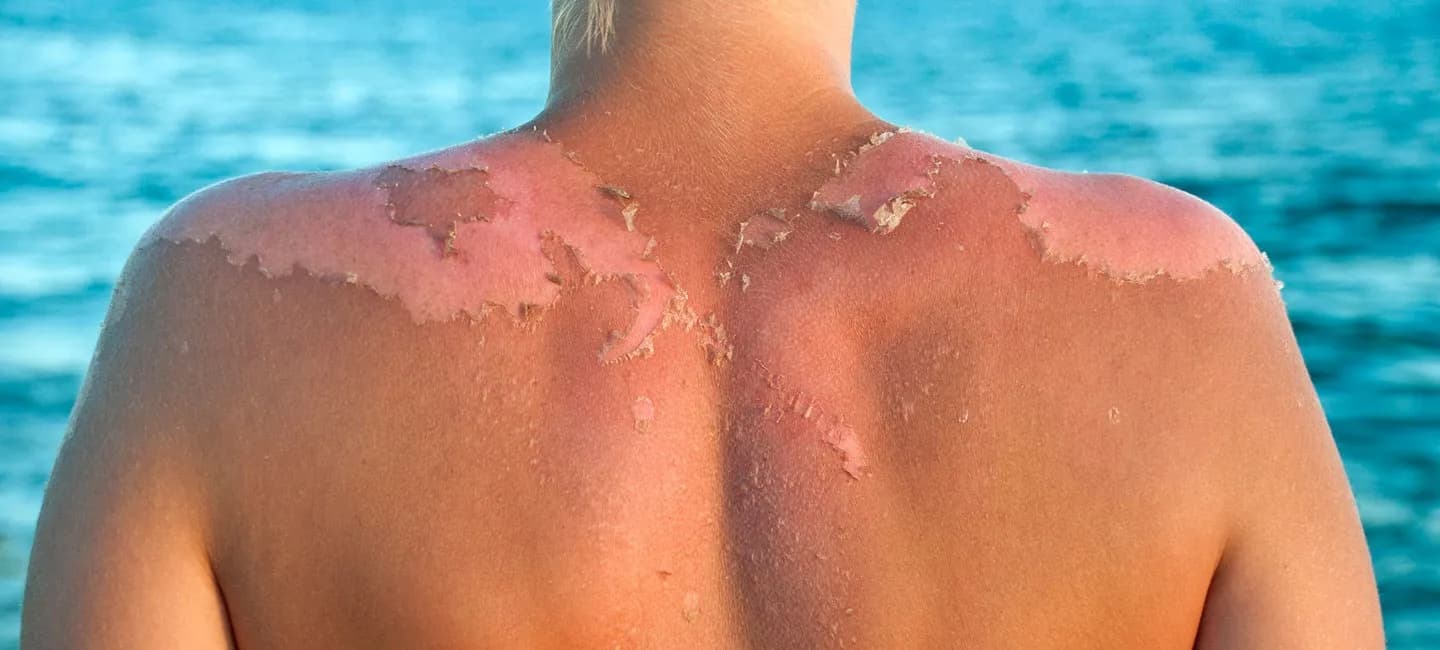
Prolonged and intense exposure to UV radiation is the most significant risk factor. People with fair skin, light-colored eyes, and blond or red hair are more susceptible because they have less melanin, the pigment that provides some protection against UV radiation. A history of sunburns, especially blistering sunburns in childhood, can significantly increase the risk¹. Additionally, living in sunny or high-altitude climates, where UV radiation is more intense, also raises the risk.
Genetics play a role as well. Individuals with a family history of skin cancer are at a higher risk. Certain genetic disorders, such as xeroderma pigmentosum, which impairs the skin's ability to repair UV-induced damage, can also increase susceptibility. Moreover, having a large number of moles or atypical moles can be a risk factor for melanoma.
Preventive measures are crucial in reducing the risk of skin cancer. Limiting sun exposure, especially during peak hours (10 a.m. to 4 p.m.), wearing protective clothing, and using broad-spectrum sunscreen with an SPF of 30 or higher can help protect the skin.
Regular skin examinations, both self-exams and professional check-ups, are essential for early detection and treatment. Early detection significantly improves the chances of successful treatment and can prevent the cancer from spreading to other parts of the body.
The Risk Factors for Skin Cancer
Skin cancer is influenced by a variety of risk factors, many of which are related to ultraviolet (UV) radiation exposure.
The most significant risk factor is prolonged and unprotected exposure to UV rays from the sun or artificial sources like tanning beds. UV radiation damages the DNA in skin cells, leading to mutations that can cause cancer. People with fair skin, light-colored eyes, and blond or red hair are particularly susceptible because they have less melanin, the pigment that provides some protection against UV radiation. Those who burn easily, freckle, or have a history of sunburns, especially blistering sunburns in childhood, are at a higher risk.
Genetics also play a crucial role in skin cancer risk. A family history of skin cancer increases the likelihood of developing the disease. Certain genetic disorders, such as xeroderma pigmentosum, which impairs the skin's ability to repair UV-induced damage, significantly elevate the risk. Additionally, individuals with a large number of moles or atypical moles are more prone to melanoma, the most dangerous form of skin cancer.
Age is another important factor. The risk of skin cancer increases with age, as the cumulative exposure to UV radiation over the years adds up. However, skin cancer can also affect younger individuals, particularly those who spend a lot of time outdoors without adequate sun protection. People living in sunny or high-altitude climates, where UV radiation is more intense, are at greater risk as well.
Certain lifestyle choices and medical conditions can also contribute to skin cancer risk. For instance, individuals who use tanning beds are at a significantly higher risk of developing skin cancer. Organ transplant recipients, who often take immunosuppressive drugs to prevent organ rejection, are more susceptible to skin cancer due to their weakened immune systems. Additionally, exposure to certain chemicals, such as arsenic, can increase the risk of skin cancer.
The Signs & Symptoms of Skin Cancer
Skin cancer manifests through various signs and symptoms, which can differ based on the type of skin cancer. The three main types are basal cell carcinoma, squamous cell carcinoma, and melanoma.
Basal cell carcinoma is the most common type and typically appears on sun-exposed areas such as the face, neck, and arms. It often presents as a pearly or waxy bump, a flat, flesh-colored or brown scar-like lesion, or a sore that bleeds, scabs, and heals but then returns. These lesions may also appear as a shiny, translucent bump that can be pink, red, white, or even blue or black.
Squamous cell carcinoma usually occurs on sun-exposed areas like the face, ears, neck, lips, and hands. It may present as a firm, red nodule or a flat lesion with a scaly, crusted surface. This type of skin cancer can also appear as a sore that doesn't heal or a rough, scaly patch that may bleed or become crusty.
Melanoma is the most dangerous form of skin cancer and can develop anywhere on the body, including areas not typically exposed to the sun. It often starts as a mole that changes in color, size, or feel, or that bleeds. Melanomas can appear as a large brownish spot with darker speckles, a mole that changes in appearance, or a small lesion with an irregular border and portions that appear red, pink, white, blue, or blue-black. They can also present as a painful lesion that itches or burns.
Other general signs of skin cancer include new growths or sores that do not heal within a few weeks. Any change in the size, shape, or color of a mole or other skin lesion should be evaluated by a healthcare professional. Additionally, skin cancer can manifest as a spot that oozes, bleeds, gets scaly or crusty, or a lesion that spontaneously bleeds without being picked at.
Diagnosis & Tests for Skin Cancer
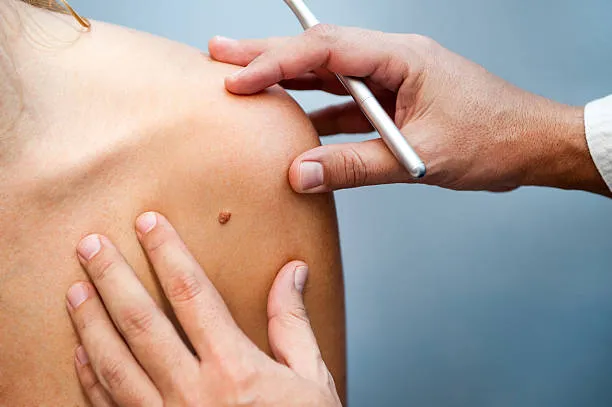
Diagnosing skin cancer involves a series of steps, beginning with a thorough clinical examination by a healthcare provider, typically a dermatologist. The process starts with a visual inspection of the skin, looking for unusual moles, growths, or lesions using the ABCDE criteria: Asymmetry, Border irregularities, Color variations, Diameter greater than 6 mm, and Evolving features. A dermatoscope, a special magnifying lens with a light source, may be employed for a closer examination of suspicious lesions. The provider also takes a detailed medical history and inquiries about symptoms such as itching, bleeding, or changes in the lesion's appearance.
If a suspicious lesion is identified, a biopsy is performed to obtain a tissue sample for microscopic examination. The type of biopsy—shave, punch, excisional, or incisional—depends on the lesion's characteristics. A shave biopsy involves removing the top layers of skin, while a punch biopsy removes a deeper, circular section of skin. An excisional biopsy involves removing the entire lesion along with some surrounding tissue, and an incisional biopsy removes only a portion of the lesion. The tissue sample is then analyzed by a pathologist to determine the presence and type of cancer cells, such as basal cell carcinoma, squamous cell carcinoma, or melanoma.
Staging of skin cancer is crucial for determining the most effective treatment options. Doctors use Roman numerals I through IV to indicate a cancer's stage, with Stage I being small and localized, and Stage IV indicating advanced cancer that has spread to other parts of the body. Early detection and accurate staging significantly improve the chances of successful treatment and can prevent the cancer from spreading.
Treatment option for Skin Cancer
Treatment options for skin cancer vary depending on the type, stage, and location of the cancer, as well as the patient's overall health and preferences. The most common treatments include surgical excision, Mohs surgery, cryotherapy, radiation therapy, topical treatments, photodynamic therapy, and immunotherapy.
Surgical excision involves removing the cancerous tissue along with a margin of healthy skin to ensure all cancer cells are eliminated. This method is effective for most types of skin cancer and is often used for basal cell carcinoma and squamous cell carcinoma. Mohs surgery is a specialized technique used for larger, recurring, or difficult-to-treat skin cancers, particularly those on the face. It involves removing the cancer layer by layer and examining each layer under a microscope until no abnormal cells remain. This method preserves as much healthy tissue as possible.
Cryotherapy uses liquid nitrogen to freeze and destroy cancer cells. This treatment is typically used for small, early-stage skin cancers and precancerous lesions like actinic keratoses. Radiation therapy employs high-energy rays to kill cancer cells and shrink tumors. It is often used for cancers that are difficult to treat surgically or for patients who cannot undergo surgery.
Topical treatments involve applying medications directly to the skin to treat superficial skin cancers. These treatments include creams or gels containing anti-cancer agents like imiquimod or 5-fluorouracil. Photodynamic therapy combines a photosensitizing agent with light exposure to destroy cancer cells. This method is effective for treating superficial skin cancers and precancerous lesions.
Immunotherapy works by boosting the body's immune system to help fight cancer. Drugs like pembrolizumab and nivolumab are used to treat advanced melanoma by targeting specific proteins that help cancer cells evade the immune system. Targeted therapy involves drugs that specifically target genetic mutations within cancer cells. For example, BRAF inhibitors are used to treat melanoma with specific genetic mutations.