

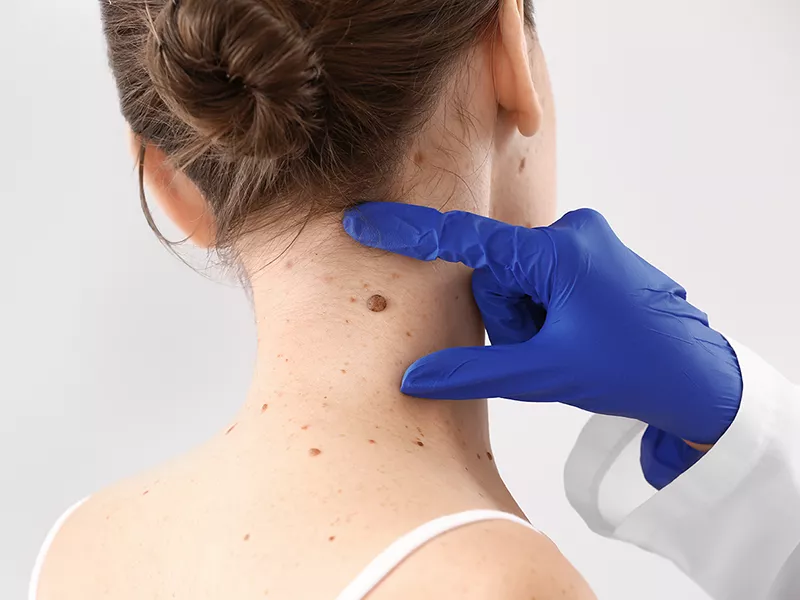
Moles are common skin growths that can appear almost anywhere on the body. Most are harmless and do not require treatment. However, some people choose to have moles removed because of their appearance, irritation caused by clothing or jewelry, repeated injury, or changes that need to be medically assessed.
When mole removal is considered, two commonly discussed options are surgical removal and laser treatment. Although both methods can improve the appearance of the skin, they work in different ways and are suitable for different situations.
What Is Surgical Mole Removal?
Surgical mole removal involves physically removing the mole from the skin using a sterile surgical technique. Depending on the mole and the reason for removal, a dermatologist or surgeon may use methods such as excision or shave removal.
With surgical excision, the doctor removes the mole, sometimes along with a small margin of surrounding skin. The wound may then be closed with stitches. This technique is often considered when the mole is larger, deeper, raised, or requires complete removal.
Shave removal involves using a surgical blade to remove a raised mole closer to the surface of the skin. The technique may be appropriate for certain benign, raised lesions, although the choice depends on the doctor's assessment.
One important advantage of surgical removal is that the removed tissue can generally be sent to a laboratory for histopathological examination. This allows a pathologist to examine the tissue under a microscope and determine what type of lesion was removed.
What Is Laser Mole Removal?
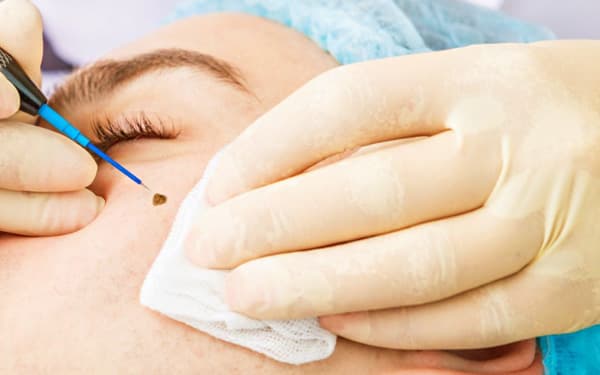
Laser mole removal uses concentrated light energy to target and destroy or vaporize selected skin tissue. Different types of lasers may be used depending on the characteristics of the lesion and the doctor's treatment plan. Laser treatment is sometimes considered for certain superficial and clearly benign skin lesions, particularly when the primary concern is cosmetic improvement. The procedure is generally performed on an outpatient basis.
Because laser treatment does not necessarily provide an intact tissue specimen for laboratory examination, it is not automatically appropriate for every mole. If there is any concern that a mole could be atypical or potentially cancerous, a method that allows the tissue to be examined may be more appropriate. For this reason, a medical evaluation should generally take place before choosing laser treatment simply because it may appear less invasive.
Surgical vs. Laser Mole Removal: Key Differences
Although both procedures can be used to address certain unwanted moles, there are several important differences.
Ability to Examine the Mole
One of the most important differences is whether tissue can be submitted for pathological examination.
With surgical removal, the doctor can often preserve the removed tissue and send it to a pathology laboratory. This can be particularly important when the mole has unusual characteristics, has changed over time, or cannot confidently be identified as benign.
Laser treatment may destroy the tissue rather than leave a specimen suitable for histopathological analysis. Therefore, it may not be the preferred option when diagnostic confirmation is necessary.
Procedure and Recovery
Surgical mole removal usually involves local anesthesia. Depending on the technique, patients may experience mild discomfort, swelling, redness, or tenderness during the healing period. If stitches are required, they may need to remain in place for a period determined by the doctor and the location of the wound.
Laser treatment can also involve local anesthesia or a topical numbing medication, depending on the procedure. Recovery may involve redness, crusting, sensitivity, or temporary changes in pigmentation.
The exact recovery period varies according to the size and location of the treated area, the technique used, and the individual's healing response.
Scarring
Any procedure that removes or damages skin can potentially leave a mark.
Surgical excision creates an incision and therefore results in a scar. However, doctors can often position the incision carefully and close it using appropriate techniques to minimize its appearance.
Laser treatment may produce less obvious scarring in some superficial lesions, but it is not completely scar-free. Some people can develop changes in skin color, persistent redness, textural changes, or scarring after laser treatment.
Individual skin characteristics also matter. People who are prone to raised scars or pigmentation changes should discuss these risks with their doctor before treatment.
Mole Characteristics
The characteristics of the mole strongly influence which technique may be appropriate. A small, superficial, clearly benign lesion may be suitable for certain minimally invasive approaches. However, a deeper, larger, irregular, or clinically suspicious mole may require surgical removal and pathological assessment.
The location also matters. Moles on highly visible areas such as the face may require particular consideration because the cosmetic result is important. Moles in areas exposed to friction may require a different treatment strategy.
Cosmetic Considerations
For people seeking removal primarily for cosmetic reasons, the appearance of the final result is often an important consideration.
Laser treatment may be appealing because it can be less invasive for selected superficial lesions. However, the final appearance depends on factors including the original mole, treatment depth, skin type, healing process, and aftercare.
Surgical removal creates a scar, but a well-planned excision can sometimes provide a predictable cosmetic result. Your doctor can discuss the likely appearance of the scar based on the mole's size and location.
Is Laser Mole Removal Safer Than Surgery?
It is not accurate to say that laser mole removal is universally safer than surgical removal. Safety depends largely on whether the treatment is appropriate for the specific lesion and whether the lesion has been properly evaluated. A mole that appears unusual should not simply be destroyed for cosmetic reasons without appropriate medical assessment. Changes in size, shape, color, or surface, as well as bleeding, persistent itching, or other concerning changes, should be evaluated by a dermatologist.
If a doctor suspects that a lesion could be atypical, surgical removal may provide the advantage of obtaining tissue for pathological examination. Therefore, the key question is not simply which technique is less invasive, but which treatment is medically appropriate for the particular mole.
What Happens During Surgical Mole Removal?
Before surgical removal, the doctor examines the mole and discusses the reason for treatment. If removal is appropriate, the area is cleaned and local anesthesia is usually administered.
The doctor then removes the lesion using the selected surgical technique. If an excision is performed, stitches may be used to close the wound. The removed tissue may be sent to a pathology laboratory, particularly when microscopic examination is clinically indicated.
After the procedure, patients receive instructions for keeping the area clean, protecting the wound, and recognizing signs of infection or other complications.
What Happens During Laser Mole Removal?
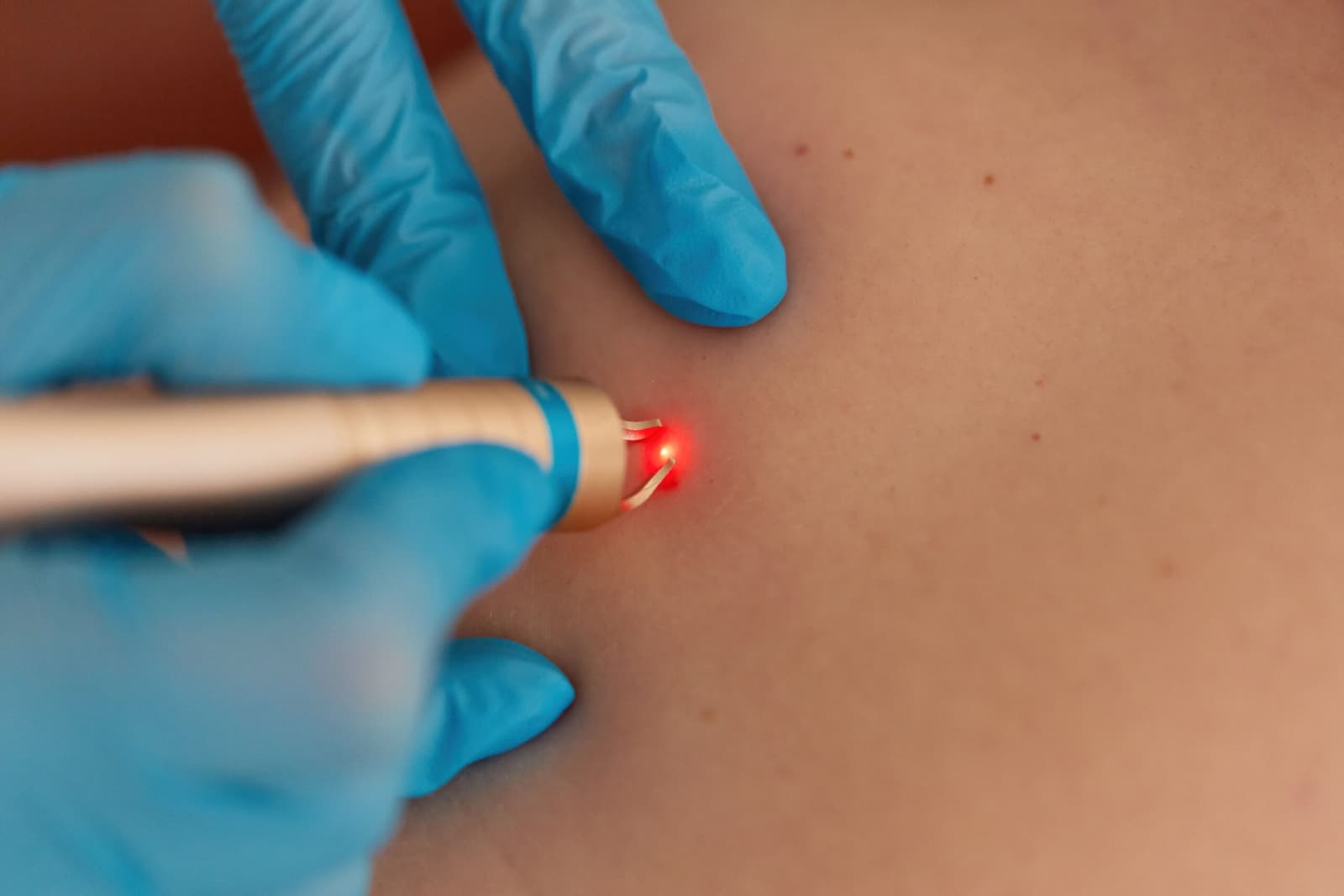
Laser treatment begins with an assessment of the skin lesion and preparation of the treatment area. Depending on the type of laser and the location of the lesion, a numbing cream or local anesthetic may be used.
The laser is then applied to the targeted area. Patients may experience warmth, mild stinging, or discomfort during treatment. Afterward, the treated area may appear red or irritated and can develop a crust as it heals. Patients should follow the clinician's aftercare instructions and avoid picking or scratching the area. Sun protection is particularly important during the healing period because treated skin can be more vulnerable to pigmentation changes.
Which Method Is Better for Facial Moles?
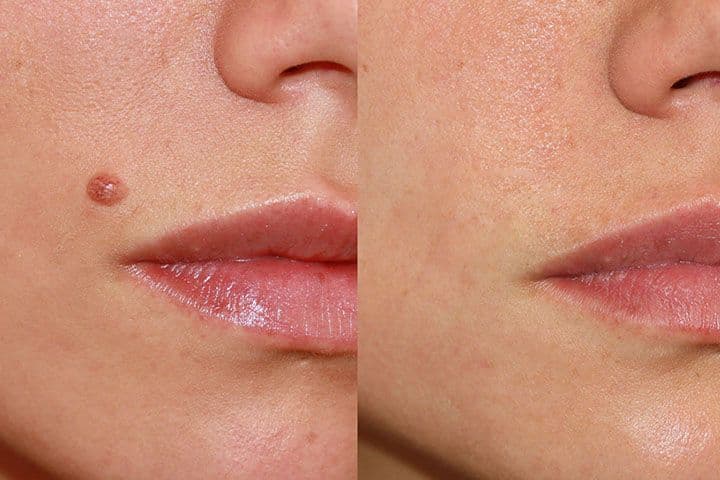
Facial moles often require special consideration because even a small scar can be noticeable. For this reason, patients may be interested in laser treatment as a potentially less invasive cosmetic option. However, the face is also an area where unusual lesions need careful assessment. A dermatologist should determine whether the mole is appropriate for cosmetic treatment before a laser procedure is considered.
If the lesion needs to be removed completely or examined by a pathologist, surgical removal may be recommended despite the possibility of a scar. The goal should be to achieve an appropriate medical and cosmetic result rather than choosing a procedure solely because it appears less invasive.
Surgical vs. Laser Mole Removal: Which Should You Choose?
Surgical mole removal may be more appropriate when complete removal is necessary, when a mole is deeper or larger, or when tissue needs to be submitted for pathological examination.
Laser mole removal may be considered for selected superficial and confidently benign lesions, particularly when cosmetic treatment is the primary goal.
Ultimately, the decision should be based on an examination by a qualified medical professional. A treatment that is appropriate for one mole may not be appropriate for another, even if they appear similar.
Conclusion
Surgical and laser mole removal are different procedures with distinct advantages, limitations, and indications. Surgical removal allows the doctor to physically remove the lesion and can provide tissue for histopathological examination, making it an important option when a mole needs diagnostic evaluation or complete removal. Laser treatment may be suitable for certain superficial, benign lesions and can be an attractive option for selected cosmetic cases. However, it should not be assumed to be the best choice simply because it is less invasive or may result in less visible scarring.
Read More